
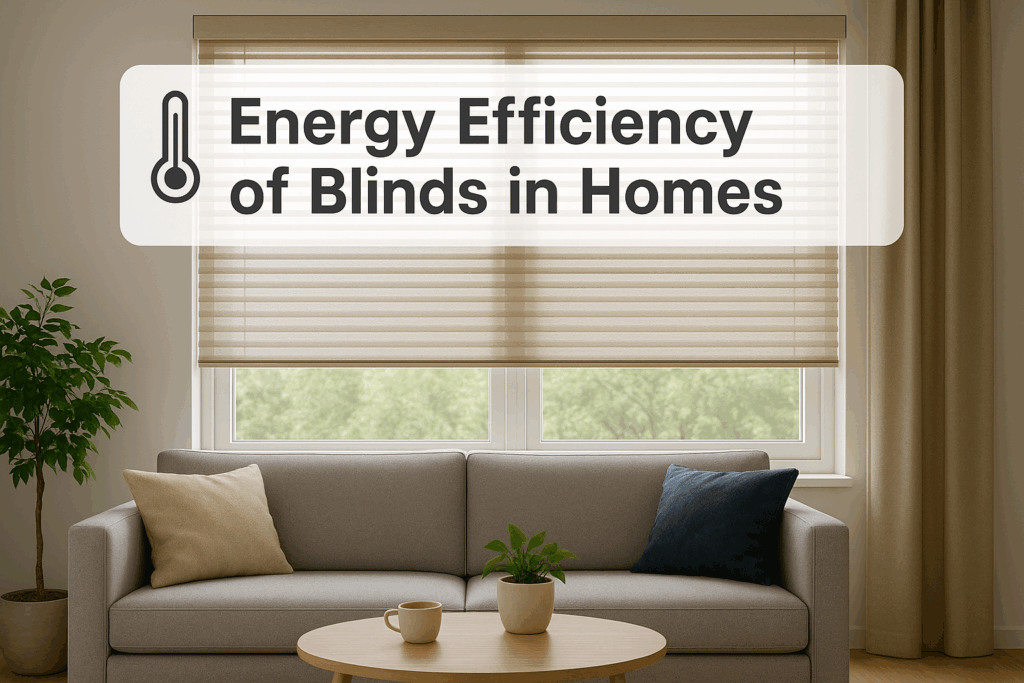
Blinds can significantly improve energy efficiency in your home by controlling how much heat and light enter or leave through the windows. Here’s how:
🌡️ 1. Temperature Control
- In Summer: Closing blinds during the day can reduce solar heat gain, keeping your home cooler. This reduces the need for air conditioning and can lower electricity bills.
- In Winter: Opening blinds during sunny hours allows passive solar heating, while closing them at night traps indoor heat, helping reduce heating costs.
🐝 2. Best Types of Energy-Efficient Blinds
🧊 Honeycomb (Cellular) Shades
- Their cellular structure traps air in pockets, providing insulation.
- Can reduce heat loss by up to 40% in winter and block up to 80% of solar heat in summer.
🌗 Dual Shades / Top-Down Bottom-Up
- Let you control light and heat precisely throughout the day.
- Keep warmth in during cold months and block sun while maintaining privacy.
🌿 Insulated Roman Shades
- With thermal linings, they act as soft, decorative insulators, especially effective in older homes.
⚙️ 3. Automation for Efficiency
- Smart blinds can be programmed to open or close based on:
- Time of day
- Temperature
- Sunlight exposure
- This boosts efficiency without needing you to think about it.
📊 Quick Stats (U.S. Department of Energy):
- Up to 30% of heating energy is lost through windows.
- Energy-efficient window coverings can cut energy loss by up to 25%.
If you’re in Canada or North America, combining energy-efficient blinds with Energy Star-rated windows can create a more comfortable and greener home — and in some areas, you might even qualify for rebates through energy-efficiency programs.
Would you like help finding options or rebate programs in BC or Vancouver?